





Sunday 28 June 2026
|
Gordonstoun’s unique co-curricular education, providing a range of activities both inside and outside the classroom, is designed to spark a ‘passion’ within students that will steer them towards realising their dreams and best career outcome. In response to changing trends, including increased awareness of student debt and graduate employment challenges, we are seeing more students consider vocational routes, apprenticeships and direct entry into employment. Destination outcomes range from degree apprenticeships with organisations such as DHL to full‑time employment with the Scottish Fire and Rescue Service. |
From September, Gordonstoun will launch a BTEC in Countryside Management for students who are interested in a career working in agriculture. It is designed for post-16 students and can be taken as part of a wider study programme. It is an ideal qualification for those intending to progress directly to employment within the agricultural sector, or to an agricultural apprenticeship.
In the run-up to the course starting, Gordonstoun has offered a series of short courses to enhance the ‘Rural offering’ at the school.
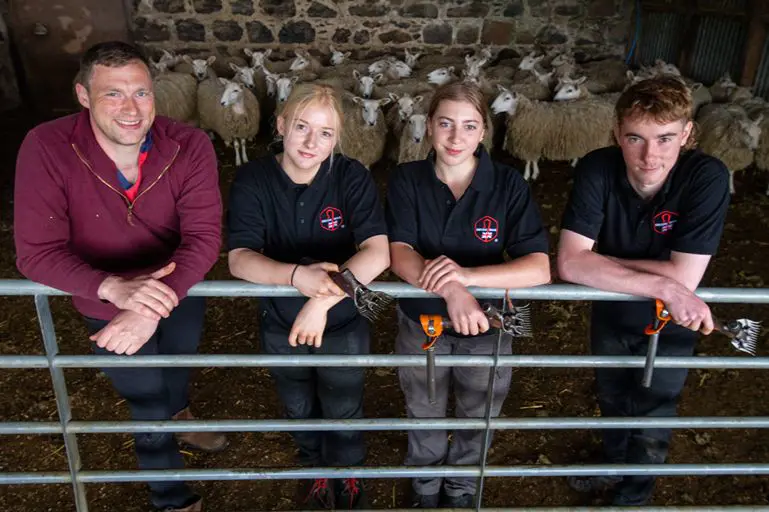
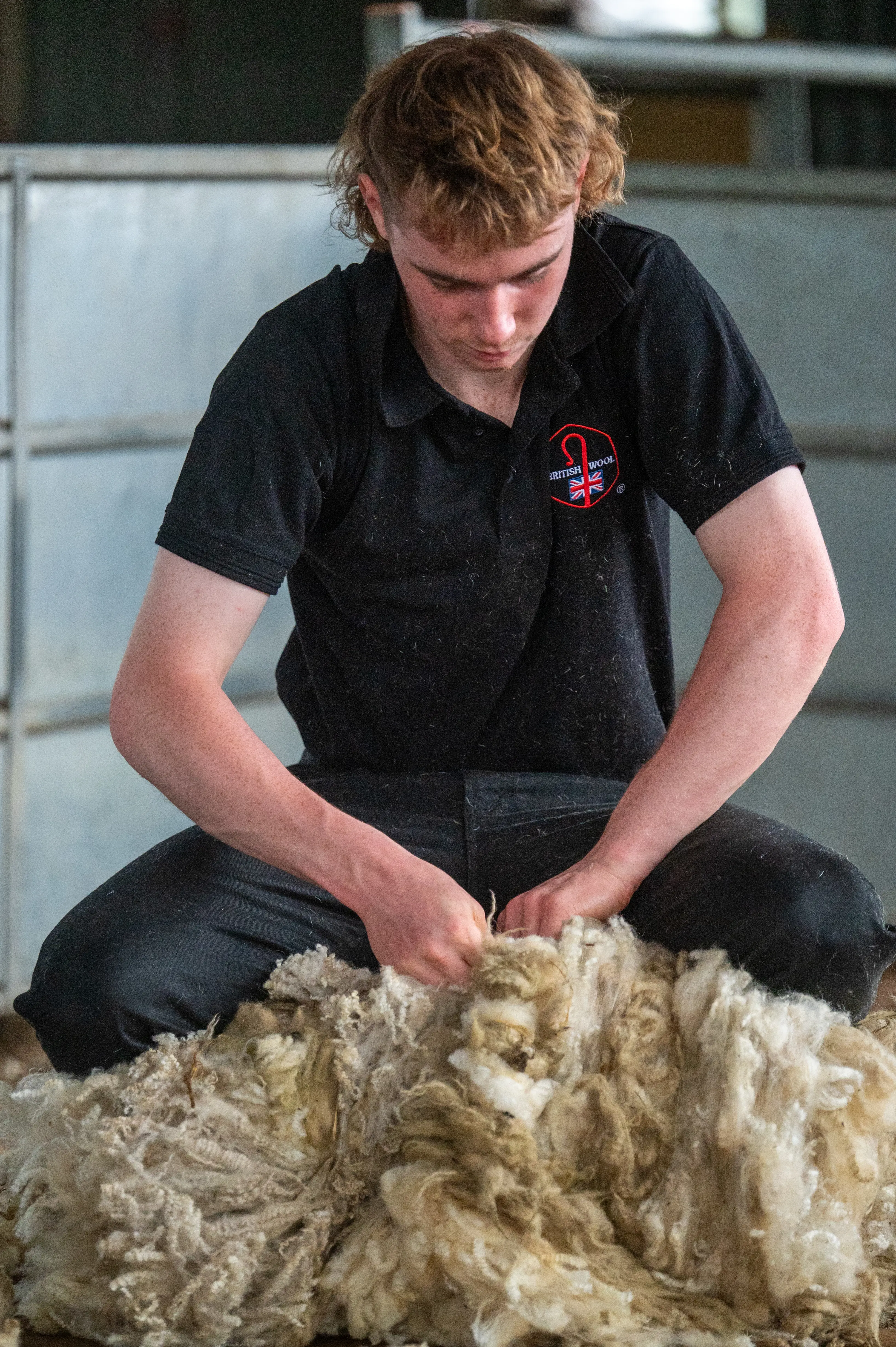
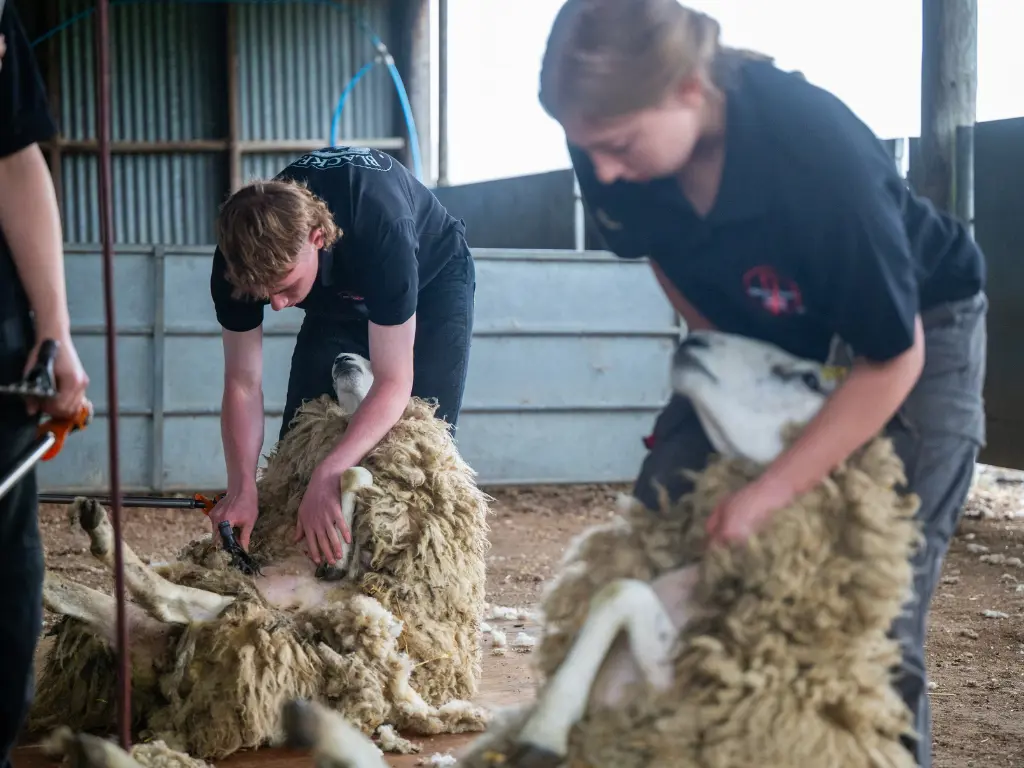
This included the introduction of the British Wool Board Blue Seal qualification in sheep shearing.
The course was launched by John Georgeson, Gordonstoun head of PE, whose family has a farm. Three students recently completed the course.
Mr Georgeson said:
"It’s a physically challenging course and a really tricky skill to master, having to hold the sheep with one hand and two feet, while using the other hand to do the shearing.
Good balance and co-ordination are also key to shearing the sheep. The instructors gave the students a pattern to do and through brute strength and skill they each managed to successfully shear several sheep. “The farmer and instructor were both very complimentary and said they would be proud to have a flock of sheep sheared to such a high standard.
“The three students all have a rural background. One of them is from the Falklands and already has experience in shearing sheep and wants to pursue it as a professional career when he leaves Gordonstoun.”
Cassie P., one of the students taking part, was first introduced to two pet orphan lambs at the family farm in Drummuir, Moray, at just 9-years-old. Since then she has raised over 300 sheep.
The 18-year old said:
"I did the sheep-shearing course because I wanted to push myself outside of my comfort zone to learn a unique traditional skill that I can use in my life. Although it’s tough, it’s rewarding and teaches you resilience, hard work and respect for the sheep. I learned how to handle them calmly and safely.
"Shearing develops compassion, as it is purely done for welfare purposes to prevent flystrike and heatstroke, not for profit.
"Sheep shearing is tough and a lot harder than it looks. You need to think about footwork, body position and the animal’s position- all while dealing with hand pieces and blades. I left with some bruises but learnt that shearing is similar to an art or a choreography.
"You need to master all these aspects for it to run smoothly. A standard day of shearing, clipping 250 to 300 sheep, is proven to be the physical equivalent of running a full marathon. So, in my opinion it's a very undervalued skill. Anyone who works with sheep knows it definitely isn’t easy but the love and care for the animals motivates us.”
Carrie now plans to shear her own sheep this summer and do a more advanced course to enhance her skill and is hoping to learn different shearing traditions and differences in places such as New Zealand, South America and Europe.
Eva W., 18, grew up on a small farm in Moray with sheep, cows and horses and said;
"Coming from a rural upbringing, I wondered if sheep shearing was something I was able to do. When the opportunity to do the course came up, I was nervous about doing it but the instructors we had were amazing.
"They gave step by-step instructions and feedback and always answered our questions with detail, giving-me and the others the direction and confidence we needed to improve over the two days.
"The course is incredibly physically demanding as you must flip the sheep, drag it out of the pen, shear it and then replace it back into the pen, without losing control. The set-up helped with this though, because none of us were 'shearing fit' because we are not at that level yet, so the instructors has us working in pairs so that we could switch each time and keep shearing all day"
Eva now plans to use the qualification to travel to New Zealand to work on a farm as part of a gap year.
Rowan C. also plans to use the qualification as an impetus to travel. But, he plans to eventually return home to the Falklands. Sheep-shearing skills will be particularly useful, given the islands have 3,500 humans and 500,000 sheep.
The 16 year old says:
"When I was young, I spent every weekend and school holiday visiting a farm in the northern section of East Falkland, where Iearned everything I know about farming and found my passion for the industry.
"I admired the work ethic and skill of the shearers and the ability to travel the world to shear while still being based in the Falklands really appealed to me. After picking up a hand piece and shearing last sides with a farmer, who in his day represented the Falkland Islands on the shearing world stage, I was pretty sure that it was a path that I wanted to follow.
"Doing the course was the opportunity to be taught the proper technique before bad habits set in, and also to gain a little bit of experience and ask questions. What also appealed to me was the opportunity to shear a different breed of sheep to the fine-wooled merino and polwarth style sheep which we have back home.
"The first day was tough on my back and energy, but after some fine tuning of foot placement and technique it got better as I wasn't constantly fighting to keep the sheep still as I was shearing. The course was also really good in mentioning the little tricks which are hard to pick up on as a spectator, and despite having watched thousands of sheep be shorn, I would never have even thought of them.
"Now that I have completed the course and earned my 'blue seal', I aim to shear sheep whenever I can and carry on asking questions to really get as good as I can be. I hope to attend Lincoln University in New Zealand for a degree in farm management, where I can hopefully attend more courses and gain even more experience before returning home to the Falklands and becoming a full-time shearer. "
"During the winters, I hope to pick up a shearing job either back in Scotland, Cumbria, or the USA to join their shearing seasons. It might even get to the point where I spend some southern hemisphere seasons in New Zealand or Australia before spending the winter back home. Ultimately, the dream is to be able to become the best shearer I can be and represent my country on the world stage. When my shearing days are over, the plan at the moment is to manage a sheep farm on West Falkland.”
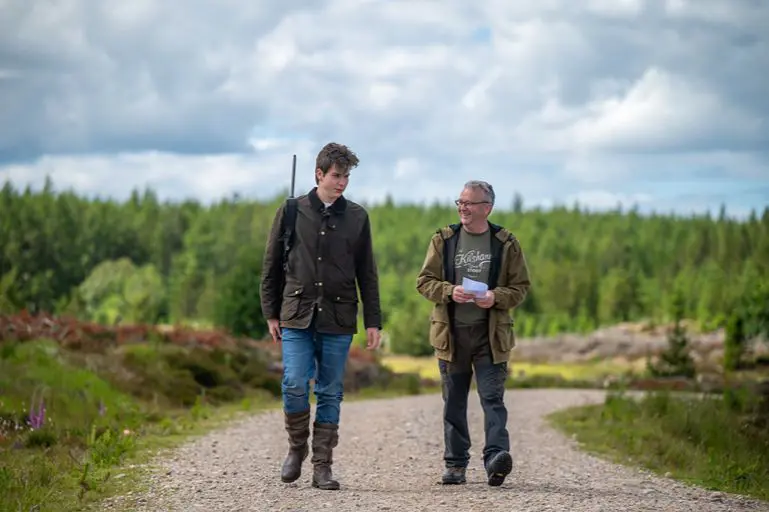
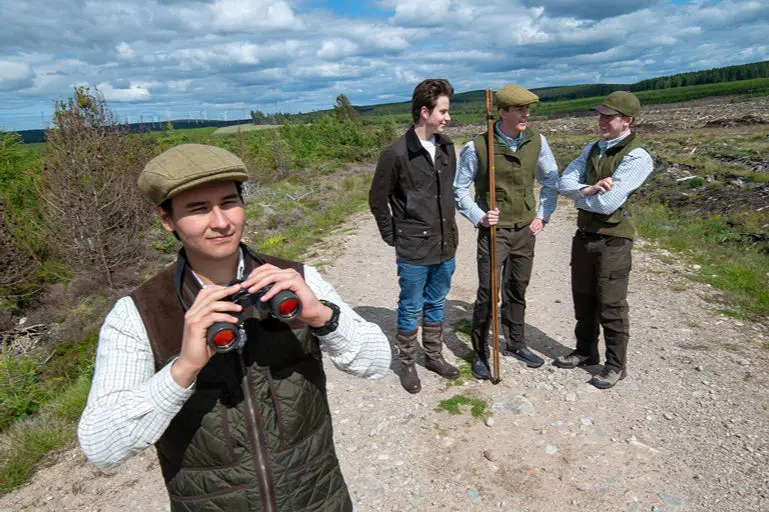
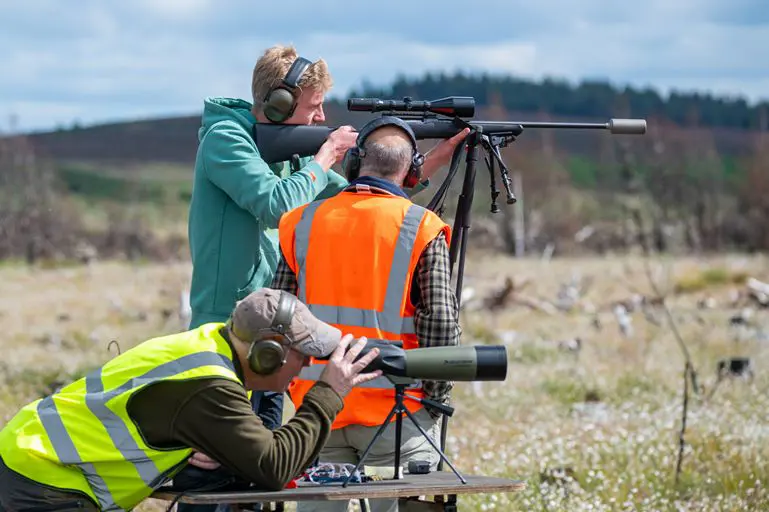
The Deer Management qualification (DSC1) for Y12 students (those over 16) is part of Gordonstoun's Field Sports and Conservation offering. The DSC1 is the nationally recognised entry qualification for deer management, sitting at the heart of modern rural land management and conservation. It equips stalkers, gamekeepers, rangers and land managers with the knowledge needed to manage deer populations humanely, legally and sustainably, balancing animal welfare with habitat protection, forestry, farming and biodiversity goals. Course Content: The course covers deer identification, biology and behaviour, relevant legislation, health and safety, firearms and ammunition awareness, and best practice in carcass handling and venison hygiene.
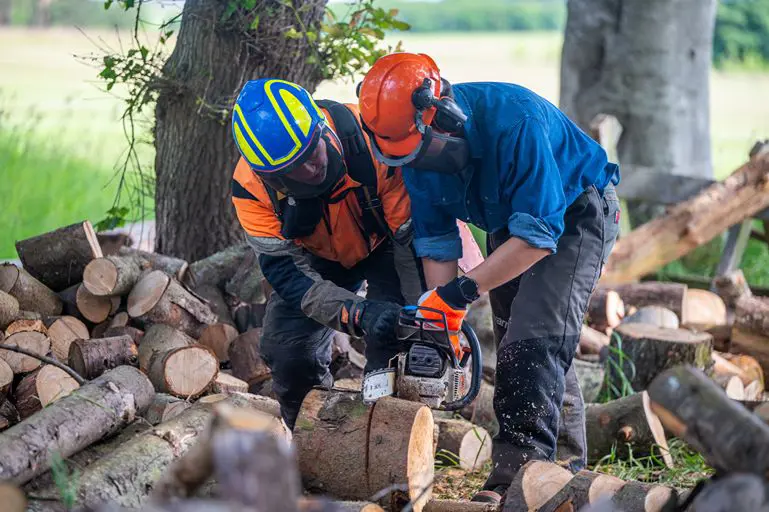
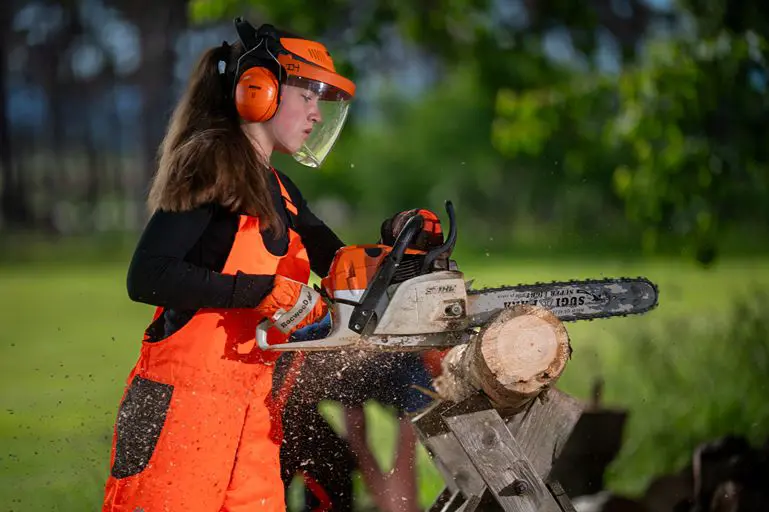
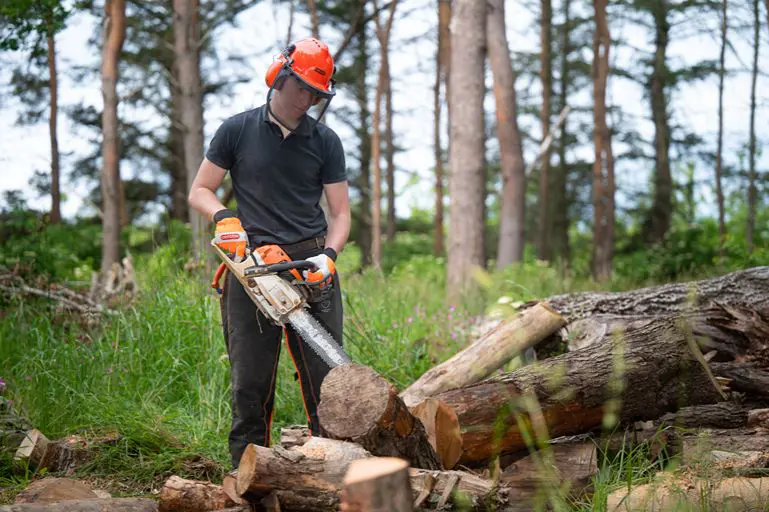
The LANTRA-accredited Tractor and Chainsaw Courses are for a small number of students that wish to acquire the skills necessary to earn money in the agriculture, forestry or rural estate/land management sectors in the UK or abroad. During the course, students will learn how to: Operate tractors safely; carry out basic tractor checks and maintenance; utilise and maintain a chainsaw correctly and safely; understand essential health and safety practices.
Three boys and one girl completed the two-day chainsaw course. Seven boys and one girl completed the Deer Management course and three boys and one girl completed the tractor course.
Christian Collett, Head or Field Sports at Gordonstoun, said:
"We have several students at the school with a Rural or Agriculture background and an interest in animal husbandry and looking after the environment. Offering courses in sheep shearing, deer management and how to operate a Tractor and Chainsaw helps to meet that demand.
“We have had a great response with all the courses fully subscribed. This has given us the building blocks to now run a BTEC in Countryside Management beginning in September.
“The two-day Tractor course not only teaches the students how to safely drive a tractor, but it also shows them how to hook it up to farming machinery or use the front-loader to pick up grain for example.
“Recognising the importance of forestry, the chainsaw courses teach the students how to sharpen and maintain the machinery and techniques such as cross-cutting felled wood. Having done this course they can then progress to a further courses on tree felling.
“The Deer management course equipped the students with the knowledge needed to manage deer populations humanely, legally and sustainably. It’s very comprehensive, balancing animal welfare with habitat protection while covering everything from best practice in carcass handling to game and venison hygiene.
“The attraction of the courses is that they are very hands-on and offer senior students in sixth form years unique skills, which they can use to pursue a career or find temporary work. Whether that’s taking the first steps into land or estate management or securing some summer work or going on a gap year.
“My 17-year-old son gained his Tractor qualification last year and recently completed a challenging six-month contract on a 19,000-acre cotton farm in New South Wales. It’s been life changing for him.
“This gave me the idea to bring the tractor course and the other courses to Gordonstoun and the response from the students and fellow staff has been so positive that we will be looking at how we can run these types of course more regularly.”
William A, 18, grew up in rural South Wales surrounded by a farm and hopes to find a job or apprenticeship in welding or blacksmithing.
He said:
"Having used saws for the past 8 years or so to cut firewood around my local area I wanted to further my knowledge and improve my skills by doing the chainsaw course.
“I have always been interested in shooting and recently started shooting with a friend who is a fairly regular deer stalker, and so I decided to take the course so I could potentially go along with him, as well as open up more job opportunities in rural areas in the future.
“I thoroughly enjoyed both courses, as there was a perfect balance of classroom theory and practical work for both. I particularly enjoyed the visit to Dallas firing range on Saturday, having chance to shoot in a strong crosswind, which I have not done before.
“Now I have completed the courses, I intend to interrail across eastern Europe this summer, and am hoping to get a job or apprenticeship with welding or blacksmithing when I return, but for any rural work these courses will come in very handy.”
Curious about Gordonstoun and the wide-ranging curriculum? To find out more about the uniquely broad range of opportunities available to our students, join us on our next Virtual Taste of Gordonstoun Webinar.